-
News & Updates
Tutoring
April 25, 2026
Questions to Ask When Choosing a Math Tutor
Questions to Ask When Choosing a Math Tutor
You’ve decided your child needs a math tutor. That’s a great first step. But with so many options available in Portland — independent tutors, large franchises, online platforms — how do you find the right fit?
The key is asking the right questions upfront. A good tutor can transform your child’s relationship with math. However, the wrong match can waste time and money without moving the needle. Here’s what I recommend asking before you commit.
Questions About Qualifications and Experience
Educational Background
Start by asking about their foundation in math. Did they major in math, education, or a STEM field? Do they have a teaching credential? While a PhD isn’t necessary for elementary math tutoring, you want someone who understands the subject deeply. In other words, they should know more than just memorized formulas.
Listen for specific degrees or certifications. Pay attention to whether they show genuine passion for mathematics. Also notice if they mention any ongoing professional development.
Experience and Specialization
Ask how long they’ve been tutoring and what grade levels they focus on. Experience matters, but specialization matters just as much. For example, a tutor who’s amazing with elementary students might not be the best fit for AP Calculus.
Be cautious if someone claims they can tutor everything from kindergarten through calculus. True expertise is usually more focused than that. On the other hand, a tutor who says “I specialize in middle school pre-algebra through Algebra 2” is showing you exactly the kind of focus you want.
In my experience running Tutor Portland, the best tutors I’ve hired are people who had to struggle with the subject themselves. Because they overcame their own learning challenges, they understand how to explain concepts in multiple ways. That perspective makes a real difference.
References and Testimonials
Any established tutor should have satisfied clients willing to vouch for them. Don’t be shy about asking for references. Follow up with those families and ask specific questions about their experience. This step takes a few minutes and can save you months of frustration.
Questions About Teaching Approach
How They Assess New Students
Ask what happens in the first session. A skilled tutor will want to understand exactly where the learning gaps exist before jumping into homework help. Specifically, look for tutors who start with some form of skills assessment, review previous tests and assignments, and ask the student about areas of confusion.
At Tutor Portland, the first thing I do with a new student is figure out where their understanding breaks down. That diagnostic step shapes everything that follows. Without it, tutoring becomes guesswork.
What a Typical Session Looks Like
This question reveals their teaching philosophy. Are they just doing homework with your kid, or are they actually teaching concepts? There’s a big difference between those two things.
Effective tutors typically review previous concepts briefly, then introduce new material or clarify misconceptions. From there, they practice problems together and assign independent work with support available. They may reserve some time for homework help, but they don’t make it the entire focus of every session.
How They Handle Confusion
Ask how they explain concepts when a student doesn’t understand the first explanation. This question is crucial because every student learns differently. A great tutor has multiple approaches to the same concept.
Strong answers mention using visual aids, relating math to real-world situations, breaking complex problems into smaller steps, and adjusting pace based on how the student responds. If a tutor can only explain something one way, they’ll struggle with students who don’t think the way they do.
How They Handle Math Anxiety
If your child says “I hate math,” you need someone who can address the emotional component. The academic skills matter, but they won’t stick if the student is shut down emotionally.
Look for tutors who have specific experience with anxious students. They should focus on building confidence through small wins and take a growth mindset approach. Most importantly, they should be patient. I’ve found that when I tell a student “we are going to figure this stuff out, okay?” the visible relief is almost immediate. That calm, confident energy transfers to the student, and it opens the door for real learning to happen.
Choosing A Math Tutor — Questions About Logistics
Location and Format
Ask where sessions take place. Your home is convenient but requires a quiet space. The tutor’s location often has educational materials readily available. Public locations like coffee shops can work but may be distracting. Online sessions offer flexibility but require good technology and self-discipline.
Consider what works best for your family’s schedule. Also think about your child’s focus level. Some students thrive with in-home tutoring because the environment is comfortable. Others do better in a neutral location where there are fewer distractions.
Scheduling and Cancellations
Life happens. Understand the expectations around cancellations upfront. Ask how much notice they require, whether you’re charged for missed sessions, and how flexible they are with rescheduling. Getting clear on this early prevents awkward conversations later.
Frequency and Duration
Most effective tutoring happens one to two times per week for students needing regular support. Sessions typically run 60 to 90 minutes, though shorter sessions work better for younger kids. Consistency matters more than intensity. Therefore, a regular weekly schedule will produce better results than sporadic cramming sessions.
Be cautious of tutors who push for excessive hours right away. Sustainable progress comes from focused, consistent work over time.
Pricing
Get clear pricing upfront. Ask about hourly rates, payment methods, package deals, and any additional fees for materials. In Portland, expect to pay anywhere from $40 to over $100 per hour depending on the tutor’s qualifications and experience.
At Tutor Portland, we offer monthly memberships that give families flexibility and consistency. You can learn more about our pricing and membership options at tutorportland.com/membership.
Questions About Progress and Communication
How They Communicate With Parents
You’re investing in this support, so you deserve to know if it’s working. Ask how and how often the tutor will update you on progress. At minimum, expect communication after each session about what was covered. In addition, look for monthly progress updates and collaboration on goal-setting.
How They Measure Improvement
Improved grades are great. However, understanding the reasoning behind the improvement matters even more. Good tutors track mastery of specific skills, speed and accuracy on practice problems, test performance, and shifts in the student’s confidence and attitude.
Realistic Timelines
Ask how long it typically takes to see improvement. While every student is different, experienced tutors can give you honest expectations. In general, small confidence boosts happen within two to four weeks. Noticeable grade improvement usually takes six to eight weeks. Filling significant skill gaps requires three to six months.
Be skeptical of anyone who promises overnight results. Real math improvement takes consistent effort and time.
Don’t Forget to Ask Your Child
After a trial session, involve your student in the decision. Ask them whether they understood the tutor’s explanations. Ask if they felt comfortable asking questions. Find out whether they think this person can actually help them improve.
Your child’s buy-in is essential. Even the most qualified tutor won’t be effective if the student dreads the sessions. As a result, their opinion should carry real weight in your decision.
The Trial Session
Most tutors offer a first session at a reduced rate or as a trial. Use this opportunity to observe a few things. Watch for rapport — do they connect with your child? Notice their patience when handling mistakes or confusion. Pay attention to whether your child is actively participating or zoning out.
Trust your gut. If something feels off, it probably is. On the other hand, if you see your child relax and start engaging, that’s a strong sign you’ve found the right fit.
Red Flags to Watch For
Walk away if a tutor guarantees specific grade improvements. Nobody can promise that honestly. Similarly, be cautious if they refuse to provide references, have no clear teaching plan, seem disorganized, or don’t communicate well with you or your child.
Also be wary of tutors who push for long-term contracts without trial periods. And if a tutor bad-mouths your child’s teacher or school, that’s a sign of poor judgment. A good tutor works alongside the classroom teacher, not against them.
Choosing A Math Tutor — Finding the Right Fit
Choosing a math tutor is like choosing a coach. You want someone who’s qualified, experienced, and connects well with your child. Don’t be afraid to interview multiple candidates. This is an important investment in your child’s education, and the right match makes all the difference.
When you find the right tutor, you’ll see more than just better grades. You’ll see a more confident student who actually believes they can do math. That shift in belief is worth more than any test score.
If you’d like to see whether Tutor Portland is the right fit for your family, I’d love to talk. You can schedule a free session at tutorportland.com/free-session, and learn more about our approach on the blog at tutorportland.com/blog.
Want to know if your child is ready for tutoring? Read our post on 5 Signs Your Child Needs a Math Tutor to find out!
April 23, 2026
5 Signs Your Child Needs a Math Tutor
Signs Your Child Needs a Math Tutor
As a parent, it can be hard to know when your child’s math struggles are just a temporary hurdle or a sign that they need extra support. Math builds on itself year after year. Because of that, addressing challenges early can make all the difference in your child’s confidence and long-term success.
I work with students in Portland who come to me at all different stages. Some show up early, when the gaps are small and fixable in a few weeks. Others arrive after years of compounding confusion, frustrated and convinced they’re “just not math people.” The earlier you catch the warning signs, the easier the fix. Here are five clear signals that it might be time to consider math tutoring.
Grades Are Dropping or Staying Consistently Low
The clearest indicator is a decline in math grades. If your child went from a B to a C or D, that’s a red flag. However, even grades that have been consistently low for multiple grading periods deserve attention.
What to Look For
Watch for a sudden drop of one or more letter grades. Pay attention to consistent C’s, D’s, or F’s over several months. Also take notice if test and quiz scores regularly fall below 70%.
Grades Don’t Always Tell the Full Story
Here’s something important to keep in mind. Some students maintain decent grades through sheer effort alone while still struggling to understand core concepts. I see this regularly. A student earns a B by doing every extra credit assignment and spending hours on homework, but they can’t actually explain what they’re doing.
This approach works until the material becomes more complex. At that point, effort without understanding isn’t enough anymore. As a result, grades can drop suddenly and dramatically, leaving both the student and the parent blindsided.
Homework Takes Forever and Ends in Tears
If math homework regularly turns into a two-hour battle filled with frustration, tears, or meltdowns, something isn’t clicking. Homework should reinforce what was learned in class. It shouldn’t feel like learning the material for the first time.
Warning Patterns
Watch for your student spending significantly longer on math than other subjects. Notice if they need constant help from you just to complete assignments. Emotional outbursts or flat-out refusal to start math work are also important signals. Similarly, if they’re staying up late regularly just to finish math problems, that’s worth paying attention to.
What This Usually Means
This kind of struggle often points to missing foundational concepts. When the basics aren’t solid, every new topic feels impossible. The student isn’t lazy or unmotivated. Instead, they’re trying to build on a foundation that has gaps in it. That’s an incredibly frustrating experience, and the emotional reaction makes complete sense once you understand what’s happening underneath.
They Say “I Hate Math” or “I’m Just Bad at Math”
When kids develop a negative identity around math, it becomes a self-fulfilling prophecy. Statements like “I’m just not a math person” or “I’ll never be good at this” signal that confidence has taken a serious hit.
The Language to Listen For
Pay attention to frequent negative self-talk about math abilities. Watch for avoidance behavior like procrastination or “forgetting” assignments. Notice if your child feels anxiety or dread before math class. Also observe whether they compare themselves negatively to classmates.
Why This Matters So Much
This mindset can stick with students for years. Furthermore, it affects their willingness to attempt challenging problems at all. A student who believes they can’t do math will stop trying, and a student who stops trying will fall further behind. It becomes a cycle that feeds itself.
I know this pattern well because I lived it. As a middle school and high school student, I fell behind in math and convinced myself I’d never need it. It wasn’t until my twenties that I realized how wrong I was and started relearning from the ground up. A good tutor can break that cycle much earlier by meeting students where they are and celebrating small wins. When I tell a student “we are going to figure this stuff out, okay?” I can almost feel the relief transfer to them. That moment is often the beginning of real change.
Your Child Needs a Math Tutor if They Can’t Explain How They Got Their Answer
Understanding the “why” behind math is just as important as getting the right answer. If your child can’t explain their process or reasoning, they might be relying on memorization rather than true comprehension.
A Simple Test You Can Try at Home
Ask your child to explain how they solved a problem. See if they can teach the concept to you. Check whether they understand when and why to use certain formulas or methods.
Students who truly understand math can walk you through their thinking. On the other hand, students who are lost will say things like “I don’t know, that’s just what the teacher said to do” or “I just guessed.” Those responses tell you that the student has learned a procedure without understanding the reasoning behind it. That kind of surface-level knowledge breaks down quickly under test pressure.
Test Scores Don’t Match Homework Performance
Some students do fine on homework but bomb tests. This gap is one of the most telling signs I see as a tutor. It reveals that the student hasn’t internalized the concepts well enough to apply them independently under pressure.
The Pattern to Watch For
Look for homework scores in the 80-90% range paired with test scores in the 50-60% range. Notice if your student needs significant help from you to complete homework. Also pay attention to whether they perform worse on cumulative assessments than on daily work.
What’s Happening
This pattern usually means the student is completing homework with support — whether from a parent, a friend, or by closely following worked examples. In those situations, they can get through the problems because the scaffolding is right in front of them. However, when the test arrives and they have to work independently from memory, the understanding isn’t there. They need help developing true mastery, not just assignment completion.
What Happens If You Wait
Math is cumulative. Algebra builds on pre-algebra. Geometry requires algebra. Calculus needs everything that came before. Gaps in understanding don’t disappear on their own. Instead, they compound.
I’ve worked with students who struggled in 6th-grade math and found themselves completely lost by 9th grade. The cause wasn’t a lack of ability. They were trying to build on a shaky foundation, and every new concept made the instability worse. The longer you wait, the more ground there is to recover.
The Good News
The earlier you intervene, the easier it is to close those gaps. A qualified math tutor can identify exactly where understanding broke down and fill in the missing pieces. In addition, they can build confidence through individualized attention, teach study strategies that match your child’s learning style, and help your student actually enjoy math again.
I’ve seen this transformation happen many times. Students who walked into their first session convinced they were hopeless at math leave a few months later saying “I think I actually get this now.” That shift in belief changes everything — not just grades, but how they see themselves as learners. They start to believe they can grow and improve. In short, they develop a growth mindset.
Next Steps
If you recognized your child in two or more of these signs, it’s worth exploring tutoring options. The investment in targeted support now can prevent years of struggle. Furthermore, it keeps doors open for STEM careers, college majors, and standardized test success.
Here at Tutor Portland, I work with students across every level from pre-algebra through AP Calculus. Most students who think they’re “just not math people” are actually missing a few foundational concepts that, once addressed, make everything downstream easier. The problem is rarely the student. It’s almost always the gap.
If you’d like to see whether we’re the right fit for your family, you can schedule a free session at tutorportland.com/free-session. You can also learn more about our approach and read related posts on our blog at tutorportland.com/blog.
September 4, 2025
Math Tutor Portland Oregon
Written by Eric M Earle • Last updated: September 4, 2025 • Revisions: 16
Math Tutor Portland
➕ ➖ ✖️ ➗ ➕ ➖ ✖️ ➗ ➕ ➖ ✖️ ➗
Math is hard. It’s really hard. I know. I’ve been there. My name is Eric M Earle and I’m the founder of Tutor Portland. As a middle school and high school student, I fell behind in mathematics (way behind). That made math and science challenging for me because STEM is cumulative. It’s based on what came before it.
But teachers don’t wait. They move on because the class has 25 other students. This means that any one student can fall behind. Like I did.
I wish I knew back then the things that I know now. At the time, I didn’t realize that math was important! I thought I would never need to know it. But I didn’t understand that math and science are everywhere in society. And additionally, there are a number of “mental-models” or frameworks for viewing the world—big concept ideas—that you can learn by studying math and science. You can apply these “mental models” in any career: finance, law, entrepreneurship, health-care, teaching—whatever the case, you can always use the big lessons from mathematics and apply those to everyday life and situations.
But when I was little I didn’t think about these things. I wish someone told me! My parents spent time looking for a private math tutor, but they didn’t find one because hiring and finding the right tutor can be challenging. As a result, I fell behind and was largely unsuccessful at math and science in high school. I fell behind and never caught back up. And *that’s* why I didn’t like math. I wasn’t good at it and because I didn’t focus on it. My lack of skill in mathematics caused me a lot of stress and anxiety. I remember once in grade school when I sat at the kitchen counter pulling my hair out and crying 😢 because I simply couldn’t understand math. I wanted to work on it but I was too far behind to even begin.
It would have been possible for me to catch up, but I wasn’t resourceful enough. I had all the resources 📚 in the world. My parents could have helped me. I could have asked my teacher. I could have found someone to help me. But I didn’t use those resources. I wasn’t resourceful. I was too young and didn’t have the drive and motivation to succeed. I look back now and realize that the right mentor or tutor could have really helped me. I wish that 27-year-old Eric could have had a conversation with my younger self.
Learning From My Math Struggles
➕ ➖ ✖️ ➗ ➕ ➖ ✖️ ➗ ➕ ➖ ✖️ ➗
What would you have told him? I would have told him how important math is. I would have encouraged him to work harder, be persistent, and just sit down with tough ideas and eventually he would start to figure them out. I would have shown him that he could learn anything if he set his mind to it. And I would have sat down with him and helped him.
When you’re trying to learn a hard subject, it is helpful to have someone sitting down next to you. They can be the one reminding you: “together, we can learn anything” and “we are going to figure this stuff out.” I often make comments such as these with my clients. I want to reassure them that we are going to get through it. We can solve this. We can figure this out.
I ask my students to get the syllabus of the course. That way we can look at and analyze their course rationally—see what every assignment is worth—and craft a winning game plan for their course.
A lot of learning is about having the right mental attitude and frame of mind. Actually, so much of life is about that!
Sometimes learning challenging concepts and ideas takes time. You have to commit to them. Sit with them. You have to sit down and start researching and learning. But when you’re a beginner and lack confidence in yourself, this can feel so overwhelming that many students fail to even start. I know this—because I used to be one of those students. And that is such a hard place to be in.
When thinking about tutoring and some of the big ideas & themes in education and education research—I often sit back and think to myself—what type of qualities would a tutor have needed in order to help me? There are a few core ideas that always come to mind:
- A great understanding of math & and the ability to explain difficult concepts in simple ways 👍
- A pleasing personality and pleasant demeanor 👍
- Somewhat that I looked up to 👍
- Strong understanding of communication and psychology 👍
- The drive to teach and improve others 👍
Wow! What a great list of attributes. Those are the top qualities I’d want in any great tutor. Tutors are able to help in multiple ways. They provide resources and assistance to students. They can also teach students how to be more resourceful and self-directed learners themselves. The best tutors *empower* their students to achieve their own learning goals. The best tutors also have a sense of persistence. They sit down and say—in a reassuring way, “we are going to figure this stuff out, okay?” That alone is incredibly helpful to a student. Normally, when I say this, I see the student visibly relax. I can almost feel my sense of calm and confidence being transferred to the student. The best tutors come from a place of knowing confidence. The best tutors are people who themselves had to struggle with the subject. And because they were able to overcome their own learning struggles time and time again, they are now in a blessed place to help others.
From Math Anxiety to Medical School
➕ ➖ ✖️ ➗ ➕ ➖ ✖️ ➗ ➕ ➖ ✖️ ➗
I got decent grades in math and science, but I never understood the subjects. It wasn’t until my early to mid-twenties that I developed the desire to start relearning mathematics. I had a life changing volunteer trip to India. I was volunteering at a neurology clinic up in northern India and I witnessed first-hand the incredible amount of poverty [and absolute lack of access to healthcare]. And it moved me. I saw people suffering and I realized that I had to help. That’s when I became a pre-medical post-grad student. At that point, my mathematics was so terrible that I couldn’t get into a college math class. I took the placement test at Portland State University, but it was so bad I couldn’t even get into math 70 [high school pre-algebra]. So I started working with a tutor. We met at the Multnomah Athletic Club twice a week. And slowly I started to improve. By fall term I was ready and enrolled myself into math 95. I remember once telling a woman this and she laughed at me. She laughed because I was starting back in such a low level of math. This didn’t bother me because I knew deep inside of me that in due time I would be taking advanced mathematics courses. And that is exactly what happened. I earned straight A’s in math 95, 111, and 112.
I fell in love ❤️ with mathematics because of my trigonometry professor, who taught our class with active learning strategies. [This is something we now employ at Tutor Portland]. These active learning techniques helped me learn math easily and effortlessly. I went on to earn over 100% in both Calculus I and Calculus II.
After years spent learning math and science as a 25 year old, my dream eventually came true and I ended up getting accepted to medical school at Eastern Virginia Medical School (EVMS), in Norfolk, Virginia. When I first when back to study high school mathematics, people laughed at me. But I was persistent and dedicated. I kept my head down and focused on my work. Now I’ve been accepted to medical school. And everyday I am studying fascinating things!
Learning math has continued to pay benefits in other ways, as well. It has helped me in every area of my life. Learning math teaches you mathematical reasoning and “number sense.” It gives you the ability to look at numbers and data and just make sense of them without extensive analysis. You just start to *get* math and numbers. This has taught me that I can truly learn anything. I took my most challenging subject and mastered it. *That* is empowering. *That* is what we strive to do for students at Tutor Portland.
Portland Area Math Tutoring Services ⭐️
➕ ➖ ✖️ ➗ ➕ ➖ ✖️ ➗ ➕ ➖ ✖️ ➗
Service Areas We Cover 📍
📍 Lake Oswego & West Linn Math Tutoring
📍 Sellwood / SE Portland Math Tutors
📍 North Portland Math Tutoring
📍 NW Portland Math Help
📍 SW Portland Math Tutoring
Math Subjects We Teach 📐
➕ Algebra Tutoring Portland
📐 Geometry Tutors Portland
📊 Calculus Tutors Portland
📈 Statistics Tutoring Portland
🔢 Basic Mathematics Tutoring
Our Portland Math Tutoring Approach
➕ ➖ ✖️ ➗ ➕ ➖ ✖️ ➗ ➕ ➖ ✖️ ➗
👍 All of this has given me perspective. It has given me a unique point of view on 1) how hard it can be to learn math and 2) how rewarding it can be to finally understand it! As a 20-something, I started tutoring students in the liberal arts. I taught public speaking, communication, writing, and Spanish. Soon after I started, parents began asking if I knew any good Portland, OR math tutors. I began interviewing math tutors. Eventually, I found a mechanical engineering student at PSU who was a good fit. He had a great ability to explain difficult concepts in simple ways. Soon I became a math tutor as well.
I realized that my unique view on math and learning was something that had to be available to more Portland families. Together, my math tutors and I have developed and honed our active tutoring approach that works to engage students in their course material and get them thinking deeply about math. We have also developed our own private mathematics curriculum. All of the research today shows that students learn math when they hear themselves verbalize their mathematical thinking. So that’s what we focus on. We ask questions which encourage students to engage with and think critically about the course material. 👍
These days I relate to math from a place of confidence, abundance, and curiosity. My mathematical reasoning skills are highly developed. I can use and apply the mathematics that I know to real-world situations. And math has provided me with different mental models, or ways to think about and analyze the world. Mental models are things all disciplines have. They are frameworks—or guiding visions—that help us see the world in certain ways. That’s why an interdisciplinary approach to learning is so favored because it allows you to think about complex problems through various lenses.
Helping Portland Students Overcome Math Anxiety
➕ ➖ ✖️ ➗ ➕ ➖ ✖️ ➗ ➕ ➖ ✖️ ➗
That’s why we’ve made it our mission to help all students—from middle or high school to adult learners—understand mathematics and apply their learning to other subjects. We’ve made it our mission to help children and families overcome the stress and anxiety around math. Tutor Portland was founded in 2015 and now has over a decade of experience helping students succeed!
It’s normal to have anxiety about math. But it’s not acceptable to never overcome your fear. The world needs young people who know mathematics. More and more jobs and positions are requiring students who understand STEM (science, technology, engineering, and mathematics). The research shows this. America is becoming an economy built on math, technology, and science. The best employees in the future will need to know these ideas and be able to think critically about math & science.
High school students often wonder what the point of studying math is—asking: “When will I ever use this?”
I used to ask those same questions!!
It’s natural to ask that. 👍
It’s our mission to help students learn math! Our goal is to help students understand how critically important math is to their future. Do they want to be a doctor, an engineer, a scientist, a businessman? All of these occupations require math! Math will make you better at whatever it is that you decide to do. At Tutor Portland, we have an element of mentoring in all the tutoring that we do. We believe it’s important to inspire students and make them want to learn math, instead of forcing them. We’ve found that by connecting a student’s future goals with what they are learning today, they become ten times more motivated to study and put the effort it. 👍
But it’s important not to push subjects on students. We often hear about teachers and parents who, in a very well-meaning way, tell their students the reasons they need to learn math. This doesn’t work 🚫. Countless studies have shown that people become more motivated to do things when they hear themselves give their reasons for why they want to do something. Therefore, we like to ask questions. We ask students questions like: “So, we know you probably aren’t interested in learning all this mathematics stuff—especially not on Sunday!—but if you were interested, why might you be?” Questions like this do a lot. First, they provide students with autonomy—something that’s important for anyone, but especially critical for teenagers. Second, this question gets the student thinking about why they might want to learn math. There are several other follow up questions to ask.
It’s important to note that questions such as these need to be asked in the setting of a relationship with strong rapport. This is where many teachers and tutors go wrong. They try to “motivate” their students without first developing a relationship with them. This erodes trust. Students don’t need to be “motivated.” Students have all the motivation they could ever need already inside of them. We just need to coax it out. But it’s elusive. That’s why tutoring is an art as well as a skill.
What Makes a Great Portland Math Tutor?
➕ ➖ ✖️ ➗ ➕ ➖ ✖️ ➗ ➕ ➖ ✖️ ➗
😃 At Tutor Portland, we’ve learned a few things about how to find a great math tutor. The first, most important thing that we look for is integrity and character. In order to gain the trust and respect of a student, it is necessary that a tutor must first show and demonstrate these deeply held qualities. In addition, it’s really important that a prospective tutor knows how to teach math. I once hired a physics tutor who was very brilliant. He had a Ph.D. in physics and was clearly smart. But he couldn’t get through to kids. He couldn’t explain challenging ideas in simple ways. This is the most important thing that is required of a tutor. I spoke with our clients regarding the Ph.D. tutor. These families told me that he was explaining concepts in a way that was over the students’ ability to grasp them. Eventually, we had to let him go. It’s not enough to be good at a subject, tutors have to know how to teach ideas and concepts in multiple ways. In fact, the ability to teach tough concepts in easy effortless ways is the number one ability of a good tutor. Understanding the material should be a given. That is baseline stuff. A lot of people understand mathematics. But very few people know how to teach math in a way that anyone can understand.
Over time we have developed a comprehensive checklist regarding what we look for in math tutors. Here are *just some* of the key elements that we look for:
- 👍 Can this tutor explain tough concepts in 5 different ways?
- 👍 Can this tutor use metaphors [which are relevant to the student’s life]?
- 👍 Is the tutor able to adopt an active learning approach where he engages the client in in-depth discussions about mathematics?
- 👍 Does this tutor embody virtues and integrity?
- 👍 How adept is this tutor at teaching mathematics?
😃 These are some of the key questions that we can ask ourselves before hiring any math tutor.
If you want to learn more about us, please feel free to email us or call us at (503) 347 7102.
➕ ➖ ✖️ ➗ ➕ ➖ ✖️ ➗ ➕ ➖ ✖️ ➗
Tutor Portland
1834 SE Saint Andrews Drive
Portland, OR 97202
eric@tutorportland.com
(503) 347-7102
October 22, 2023
How to Find the Base, Height, and Area of Triangles (Right, Acute, or Obtuse!)
Why can’t triangles all be the same? It’d be nice if isosceles, equilateral, acute, and obtuse triangles followed the same rules as right triangles, but unfortunately they do not. Don’t let the goofy shape names confuse you, every type of triangle has a simple formula for finding area, base, and height. Perhaps the easiest way to approach these formulae is to start with the most basic triangle form: The Right Triangle.
Right Triangles
A right triangle is characterized as having one 90° angle, a base, height, and hypotenuse. The base and height are the two adjacent sides to the right angle. The hypotenuse is the side opposite the right angle and is the longest of the three.

Finding the Area of a Right Triangle
In geometry, we often need to find the area of a triangle. We can only find the area of the triangle when we know two of the side lengths. It’s easiest to calculate the area when we know the length of the base and height. If we have this information, we can use the following equation to determine the area:
A = ½ base × height
Let’s use this formula to find the area of the triangle below:

A = ½ base × height
A = ½ (6 × 7)
A = ½ (54)
A = 27
Simple enough, right? However, in geometry we’re not always given both the base and height measurements. In this case, we have to take a few more steps to solving for the area of a right triangle. So, let’s go through the process of determining the base and height of a right triangle so we can perform the formula A = ½ base × height.
Finding the Base & Height Using The Pythagorean Theorem
We use the pythagorean theorem to determine the side lengths of a right triangle. The equation goes as follows:
a ² + b ² = c ²
Variables a and b represent the base and height of the triangle and variable c represents the hypotenuse. In this example, the shorter lengths of the triangle (the base and height) are on the left side of the equation whereas the longest side (the hypotenuse) is on the right side.
Let’s use the pythagorean theorem to solve for the base of the triangle below:

a ² + b ² = c ²
a ² + (12) ² = (15) ²
a ² + 144 = 225
a ² = 225 – 144
a ² = 225 – 144
a ² = 81
a = √81
a = 9
The base length of this triangle is the integer 9. Since all the side lengths of this triangle are integers (whole numbers with no decimals points) this combination of numbers qualifies as a pythagorean triple. Common examples of pythagorean triples are 3:4:5 , 6:8:10 , 9:12:15 , and 8:15:17.
Most combinations of side lengths do not result in all numbers being integers, however. Because the pythagorean theorem deals with square roots, one of the side lengths will usually be rounded to the hundredth decimal.
Let’s find the missing height of a triangle that doesn’t result in a integer:

a ² + b ² = c ²
(7) ² + b ² = (13) ²
49 + b ² = 169
b ² = 169 – 49
b ² = 169 – 49
b ² = 120
b = 120
b = 10.95
Now that we know the height of the triangle, let’s solve for the area:
A = ½ base × height
A = ½ (7 × 10.95)
A = ½ (7 × 10.95)
A = ½ (7 × 6.65)
A = 38.32
It’s as easy as that!
Using Area to Determine the Base and Height
How can you determine the base and height of a right triangle when you only know the area and one side length? You can’t use the pythagorean theorem because that requires two side lengths. Instead, you can rearrange the area formula to solve for the missing side length:
A = ½ base × height
2 × A = (½ base × height) ×2
2A = base × height
2A/base = height or 2A/height = base
Let’s use the above formula to solve for the height of the triangle below:


Let’s use the same formula to solve for the base of this triangle:


Finding the Area of an Acute Triangle
There are two ways to determine the area of triangles without a 90° angle. The formula you use depends on what type of triangle we’re working with. If we’re looking to find the area of an acute triangle, we will have to implement one of these three sine formulas:
½ ab sin(c) = Area
½ ab sin(a) = Area
½ ab sin(b) = Area
In order to determine the area of an acute triangle, we must know two side lengths and the angle measurement opposite of the third side. The formula we use depends on which combination of sides and angles we know. In the triangle below, we know side lengths a and b. We also know the measure of angle c. Because of this, we can use the formula ½ ab sin(c) to determine the area of this triangle:

½ ab sin(c) = A
½ (25 × 22) sin(40°) = A
½ (25 × 22) sin(40°) = A
½ (550) × 0.64 = A
275 × 0.64 = A
176 = A
Finding the Area of an Obtuse Angle
Finding the area of an obtuse triangle requires a different method. Instead of using the sine function right away, we will create a right angle by forming a straight line that extends out from both points C and A. The point at which these two lines intersect forms a right angle. Let’s label the new triangle DEF. For both of these triangles, the uppercase letters represent angles. The lowercase version of each letter represents the corresponding side length to each angle:

We can find the area of an obtuse triangle by creating an altitude line. The altitude of triangle ABC was created by forming the line labeled h (height). Since ACD is a right triangle, we can find it’s area with the equation A = ½ base × height. We can also determine the area of the larger triangle ABD using this equation. To find the area of obtuse triangle ABC, we must then subtract the area of ACD from ABD:
Area of ABC = Area of ABD – Area of ACD
Depending on the given information, we can use geometric proofs and perform sine formulas and to solve for the missing side lengths. Once we have enough information to find the areas of triangle ABD and triangle ACD, we can use subtraction to find the area of triangle ABC.
Solving for Area Using Multi-Step Formulas
Let’s apply the numerous methods we’ve learned about determining area to obtuse triangle DEF:

The first step to finding the area is solving for the missing lengths. You can determine the base length of the smaller right triangle by subtracting 28–20=8. To figure out the height of this triangle we must use the pythagorean theorem:
8 ² + (height) ² = 172
64 + (height) ² = 289
(height) ² = 289 – 64
(height) ² = 289 – 64
(height) ² = 225
(height) = 225
(height) = 15
As you can see, this right triangle is a quadratic triple as all it’s measurements are integers. Let’s use the height and base to find the area of this right triangle:
A = ½ base × height
A = ½ (8 × 15)
A = ½ (120)
A = 60
Now let’s find the area of the larger right triangle:
A = ½ (15 × 28)
A = ½ (15 × 28)
A = ½ (420)
A = 210
Finally, let’s subtract the two areas to find the area of triangle DEF:
Area of DEF = 210 – 60
Area of DEF = 210 – 60
Area of DEF = 150
If you’re still having a hard time grasping triangle areas, heights, and bases, don’t feel defeated. Tutor Portland is here to the rescue! At Tutor Portland, we specialize in finding tutors that will give you the extra help and assistance you need to keep up with your coursework and kick butt at your next test. Whether you need in-home or virtual assistance, we’ll find the perfect tutor to suit your academic needs and help you master concepts like finding the areas of triangles. Sign up today for your free intro session!
July 16, 2023
Calling In Some Tutoring Help
Here’s why YOU Should Consider a Tutor for That Extra Push
School Of Thought
We all need support. There are times where we’ll need it more than usual, but needless to say community is an incredible resource. Support is a way to surrender to our vulnerability and seek a little comfort.
And when it comes to education, support is not just a resource but a NECESSITY.
Everybody is adept in different fields of knowledge, so stepping into areas of unknown can be quite frustrating. It’s especially uncomfortable for young kids, who get frustrated much easier when they don’t receive instant gratification (or understanding).
If they’re in traditional schooling, they’re probably learning multiple subjects at a time- and that can get overwhelming! It’s difficult to expect perfection in EVERY area they embark on, so what’s a kid to do?
That’s why it’s super important to consider any and all resources available to them! Outside of a regular classroom setting, there’s a multitude of ways to incorporate extra care to supplement education. One of the more personalized experiences is hiring or finding a tutor!
Tutors can explore ANY subject, from writing to science to math and even to test preparation. They’re especially useful for math education since so many kids are not naturally affluent in this dense discipline.
But what REALLY makes a tutor so enthralling? Oh, let us list the ways!
Why Tutors Are Worthwhile
Tutors are personable, malleable, and considerate people able to provide a refreshing perspective to a learning experience. They may bring new and even revolutionary approaches to comprehending the fundamentals or machinations of an educational area.
What are the biggest benefits of hiring a tutor? Here are some core benefits just to name a few!
Provides an Intimate Experience: Tutors not only provide a unique learning experience but it’s a direct exchange between an educator and student; that constitutes a nurturing atmosphere! You can find tutors that work one-on-one or in smaller group volumes, which can make the actual environment less distracting or intimidating! There are going to be private educators that will work with your needs or goals, and may even introduce new ideas to broaden your tool kit.
Have An Individual Approach: Every tutor is going to bring something different to the table. What’s so inspiring about tutors is their unique perspective and teaching styles! While traditional teachers & educators do the same- they do have to follow institutionalized rules and regulations. Tutors show up to their containers bringing a lifetime of experience, knowledge, OTHER resources, and more to cultivate a one-of-a-kind experience.
Easily Accessible: With the age of technology comes more and more ways to access what we need- especially amidst a global pandemic! One of the coolest things about seeking a tutor is the various platforms you can discover them on! Aside from the usual in-person options, you can find a virtual tutor as well! This goes to show how flexible and accommodating tutors can be, and it doesn’t limit you to a certain proximity! Tutors can be found anywhere and passionate about helping you achieve your desired outcomes.
Primarily There to HELP You: Although this is a full-time or part-time profession for these people, they’re all there to help YOU. Tutors are passionate about bringing new and refreshing ways to learn into someone’s space, which is what makes each and every encounter with them so amazing! Regardless of the amount of students they teach at a time or the subject at hand, the tutor is there to give that extra push of support and accountability you need to level up your learning!
What To Consider
Aside from ALL the benefits of hiring a tutor, there are a multitude of things for YOU to consider so you know what exactly to look for.
Here are some powerful questions to help you get started:
– What are you looking to learn more about, or master? This is going to help you niche the content demographic for your future educator.
– If you’re looking for someone else (i.e. a child you interact with or student you teach), what seems to be their biggest setback?
– What ACTUALLY needs to be broadened: the understanding of the content, or methods to better execute it? Some people have harder times understanding the functions of what they’re learning rather than the content itself.
– What are some qualities and characteristics you want to experience with your tutor?
– Are there any other learning accommodations you need to consider?
– Do you learn better in-person, virtually, or a mix?
– What kind of learner are you (visual, auditory, kinesthetic, audiovisual)?
August 18, 2021
Is zero a rational number?
If you are currently studying integers in your math class, you may find that rational numbers are the next topic addressed by your teacher. They may ask the class “is zero a rational number?” Although you know the definition of a rational number, this question can stop you in your tracks.
Knowing basic properties regarding integers and rational numbers may seem like a one-time lesson in your mathematics career, but being able to fully comprehend the purpose and the rules of rational numbers can directly help you with other complicated math concepts. Instead of just thinking the old narrative that learning a math lesson will only pertain to your specific lesson, quizzes, and tests, truly understanding rational numbers can help you learn how to solve multi-step problems in the future.
In addition, learning rational numbers and mastering integers helps you to understand how these math concepts all relate to one another as you progress in your education. Learning the relationship between rational numbers makes mathematics easier to understand as a whole.
By using critical thinking skills to find answers to questions such as “is zero a rational number?”, you can help simplify complicated equations and find the solution.
First – what is a rational number?
Before you can determine if zero is a rational number, we need to brush up on your definition of rational numbers. A rational number is any number that can be presented as a over b, where b is not equal to zero. Like this:
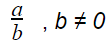 Therefore, practically every fraction that you have worked with in the past can be defined as a rational number. The only condition is that the “bottom” number in the fraction – also known as the denominator – cannot be equal to zero. Therefore, all whole numbers are rational, since any rational whole number can be expressed as a fraction with 1 in the denominator slot.

But how can you identify rational numbers from irrational numbers? Irrational numbers are not able to follow the rule that it can be presented as a over b, where b is not equal to zero.
In this case, you might come across irrational numbers that look like the following:
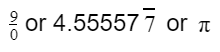
When looking at a fraction, sometimes the numerator can be zero. This means that a can equal zero, but b is not equal to zero. For new learners, just seeing a zero in the equation can sometimes throw off their thought process. However, keep in mind that a rational number with zero as a numerator can easily be simplified as such:
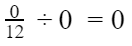
Since the greatest common denominator between 0 and 12 is 0, you can simplify a rational number fraction with a zero in the numerator by dividing both integers by zero. If you see a fraction with zero in the numerator, the answer will ALWAYS be zero.
Examples of rational numbers
Some examples of rational numbers include ¼, ⅔, 0/1, 8/6, and so on. As you can see, one of the numbers included here was 0 over another number – this is considered a rational number since the denominator is either a positive or negative number and is not equal to zero.
Operations on rational numbers
Just because a number is a fraction or contains a zero within the fraction, this does not mean arithmetic operations are impossible. Arithmetic operations are the basic processes of functions you can use with integers, including addition, subtraction, multiplication, and division.

- With addition, you can add two fractional rational numbers by making the denominator the same value.
- When carrying out subtraction, make the denominator the same number before subtracting one rational number from the other one.
- In the case of multiplying two rational numbers, make sure you multiply both the numerator and the denominator of the rational numbers.
- When it comes to dividing a fraction, you must calculate the inverse of the rational number. In this process, switch the numerator and denominator.
- For example, 2/4 will then switch to 4/2. You can double-check your work by multiplying the two values together to see if they equal 1, with the equation being (2/4)x(4/2)=1.
What are irrational numbers?
There are clear differences between rational and irrational numbers. Now that you know rational numbers are any type of integer that can be expressed as a/b where b does not equal zero, you can narrow down all integers that do not follow this formula to be considered irrational numbers.
Rational numbers are either positive numbers, negative numbers, or equivalent to zero. However, irrational numbers cannot be written in the form of a/b, but must be written as a decimal.
One of the most common irrational numbers is Pi (), which has endless digits after the decimal point. If you have studied geometry in the past, you know that Pi is the ratio of the circumference of a circle to its diameter – a number that comes out to approximately 3.14. However, this solution is just an approximation, but not accurate enough to be written as a fraction or classified as a rational number. Since the decimal digits of Pi are nearly infinite, you cannot use a simple fraction that represents Pi.
Furthermore, Euler’s number () is another irrational number that cannot be simplified or written as a fraction. This number is the base of natural logarithms and is an important concept used in the exponential function. Euler’s number is typically written as 2.718, but contains over 1 trillion digits in the decimal – making it impossible to compose in fractional form.
Another common irrational number is the Golden Ratio (), a ratio called “divine proportion”. This unique ratio is a common number that is found in various aspects of our life and culture, not just in mathematics. Appearing in paintings, artwork, sculptures, and buildings, the Golden Ratio is known for being aesthetically pleasing. This number is typically approximated as 1.618, but cannot be expressed in simple fraction form.
So – is zero a rational number?
Now that you know the difference between rational and irrational numbers, you may still be asking yourself – is zero a rational number? You know that zero cannot be the denominator of a rational number, since this would classify the rational function as undefined. However, zero can be the numerator in a fraction, which qualifies zero as an eligible rational number.
Since zero is an integer, it can be written as A in the formula A/B (ex: 0/1, 0/3, 0/6, etc.). Writing zero as the numerator over a positive or negative denominator confirms that zero can be considered a rational number (ex: 0/2, 0/-2, etc.).
Keep in mind that 0 cannot be used as a denominator in a rational number equation. If this was the case, any number divided by 0 would result in infinity – as we learned earlier, irrational numbers cannot be written as a fraction with integers as both the numerator and denominator. Any integer divided by 0 is an irrational number.
Why is it important to know if zero is a rational number?
If you are struggling in your math class and you have finally cracked the code to the rational vs. irrational number debate you might still be wondering how this will help you understand difficult math concepts.
Knowing that zero is a rational number can give you deeper insight as to how integers can be calculated and how they function within different equations. Being able to distinguish between rational and irrational numbers can help you understand more difficult concepts that you previously had a difficult time understanding.
Learning rational numbers, understanding how to interpret rational numbers, and identifying rational vs. irrational numbers can help students understand how to represent rational numbers when composing equations, how to determine which fractions are greater than others, and how to simplify rational numbers in fractional form.
July 23, 2021
How To Find A Statistics Tutor
“As with almost anything, you benefit most by being taught by someone who has a solid knowledge of the fundamentals, has real world experience in the area, and has the ability to communicate effectively.”
― Ron Glaser, P.H.D., retired US Government statistician and retired UC Davis Statistics Professor, on finding the right statistics tutor.
If you are looking for a statistics tutor, there is a good probability you are looking at a math syllabus full of unusual words: biostatistics, linear models, regression analysis, data mining, survey sampling—that kind of thing.
Statistics isn’t like algebra or geometry, it’s a whole other animal. Even calculus professors can be lousy when it comes to statistics. And if you need help, you may find your math tutor doesn’t make the best statistics teacher either. So, where do you find the elusive statistics pro? Craigslist? The local college career office? Is there a young, fun descendant of the Father of Modern Statistics Sir Ronald Aylmer Fisher living in Portland?
If you actively seek out a statistics specialist, there’s a ninety-nine percent chance you will find what you’re looking for. But if you want a 100% guarantee, here’s what you need to do…
Where to Find a Statistics Tutor
If you sense you need help in statistics, you are already ahead of the curve. Many struggling students can be too stubborn to get help and end up tanking their grade point average by attempting to take on statistics on their own. If they pursue a career that uses statistics, such as sales or computer programming, they might be at a loss, frantically searching the internet for a review course. But it doesn’t have to be that way!
It’s important for anyone seeking a career that involves statistics to find a statistics tutor with a well-rounded understanding of both statistical computations and how it relates to a career in data science or statistics. The best place to find private statistics tutors is online. Don’t be overwhelmed with all the tutoring websites out there because there are ways to trim the fat and find the perfect fit.
Look for websites that have been around for a while, have helpful contact information, and use official email addresses or phone lines (as opposed to tutors’ personal contact information, which can be a sign of inexperience as a business). Another trait of a trustworthy tutoring site is a review section where users can provide feedback on their tutoring experience. This way you can validate a good reputation within your local tutoring community.
What Qualifications Should Your Tutor Have?
According to Ron Glaser, a retired Lawrence Livermore Lab statistician and university statistics professor, it’s ideal to find a tutor who has a degree in math or statistics, or a college student with marked success in statistics coursework. Glaser would not recommend engineers or scientists who have not had formal statistics training as tutors, because they tend to bluff on knowing lessons students need, but don’t actually know themselves.
You will need someone who can prepare you for college-level coursework in statistics, which translates to someone who has at least a B.S. in statistics or a closely-related field, such as biostatistics, applied mathematics, or computer science. If you are searching on the Internet, think grad student. If a tutor is actively working toward a Masters or PhD in statistics, they will have the necessary experience to teach course material and apply it to everyday life.
However, having academic experience isn’t always enough. Consider finding someone who has experience applying statistics in the workforce or has experience teaching or tutoring. The combination of education and experience in the field will be your best bet for a statistics tutor.
To take the search one step further, here is a checklist for just some of the key elements we look for when hiring statistics tutors at Tutor Portland:
- Can this tutor explain tough concepts in five different ways?
- Can this tutor use metaphors that relate to the student’s life?
- Can this tutor adopt an active approach with in-depth discussions about statistics?
- Does this tutor embody integrity and virtue?
- Can this tutor effectively teach us, the Tutor Portland team, before we hire them?
How much does a good statistics tutor cost and how to ask?
Okay, so you found yourself a qualified tutor named Sir Ronald Aylmer Fisher Jr. and he’s fabulous, but you need to know how much he charges per hour. Here’s a statistic for you: The cost of living in Portland is 29 percent higher than the national average. On a college student’s salary of $21,000 per year, with a meal card from the folks, can you afford a tutor?
Here’s the rundown on the costs:
At Tutor Portland, for instance, we offer online and in-home tutoring backed by a Better Grades Guarantee for our Portland peeps with different budgets. Let’s say you need a statistics tutor for your coursework at Portland State University. We charge $96 per hour for our Silver Plan academic coaching or $384 monthly for one hour per week. Your hours never expire, rolling over to future months, and the more hours you book, the more discounts you receive.
If you decide to hire an independent tutor without such payment models, you should consider asking their rates upfront. The more education, work experience, and overall skills the tutor has, the higher the rates may be. And don’t be shy— after all, statistics tutors are used to talking numbers.
How to Get the Most out of a Tutoring Session
It’s all about your personal needs. So the key to maximize your time with a tutor is to study between sessions. By being observant (and hopefully excited) about how statistics play out in the news, in school, in work-life, and at home, you will be mastering the subject in a meaningful way. Then when you meet with your tutor to review the lessons, you can have a deeper understanding of the course material in less time.
Now that You’ve Aced Statistics …
If statistics clicks with your brain after a tutoring course, you may even choose it as a career. Among the industries that hire statisticians, the median wages range from $70,000 to more than $100,000 per year. Statisticians are in high demand, and according to Northeastern University, employment for mathematicians and statisticians is expected to grow 30 percent from 2018 to 2028.
Now that you found your tutor who is qualified, affordable, and can get you ahead in your statistics class, what’s next? Maybe another class! TutorPortland offers tutoring in test prep, science, Spanish, and English, so contact us if you’re looking for some extra help.
June 1, 2021
How Tutors can Help Students with English Comprehension
English and reading comprehension is a critical skill that every child needs to learn during their education. Without comprehension, reading, learning, and speaking can be a frustrating task for students. As a teacher, all children must learn the proper skills to understand what they are reading and truly digest the information.
However, all children learn differently. Some students are auditory learners, whereas others need to see physical examples to fully grasp the concept in the lesson. Due to the wide range of learning styles, public schools and current educational institutions often do not provide the classroom with enough variety for every student to comprehend all topics.
Without the resources needed to help every individual student, some children fall by the wayside – a dangerous side effect of universal learning that can impact their educational trajectory.
One solution to helping individual students who may have different needs than what they can find in the classroom is using individual tutors. To better understand a difficult concept and comprehend a book, poem, or story, an English tutor can help students work through the learning blocks in their minds.
What comprises ‘good’ reading and comprehension?
You may have heard your teacher in school talk about ‘good’ reading vs. absent-minded scanning the words on the page without really taking in any of the information.
- Studies have shown that good readers use various skills while analyzing content that helps them comprehend and retain the information on the page.
- Good readers use active processes and skills before, during, and after reading text.
Before reading, active readers will set goals for their assignment, analyze the sentence structure, organization of the text, and outline the text to see what they may be looking for in their analysis and comprehension.
During reading, good readers will ensure they understand each word without skipping words or sentences, as this can change the intended message of the passage. They will simultaneously calculate the meaning of the phrases, sentences, and paragraphs as a whole, while piecing together this information into a comprehensive concept.
When they are reading, they will focus their attention on the sections of text related to their pre-set goals. For example, if they must look for similes in a body of text, they will focus on scanning for the words ‘as’ or ‘like.’
After reading, good readers will analyze what they have just read. They will summarize the major points of the text, tie these major events back to their pre-reading goals, and research any extra information if needed to clarify the content.
What are the advantages of improving English comprehension?
You may think you can skate by without having perfect reading or English comprehension. Like other school subjects, you may think this subject becomes obsolete as you get older and only applies to certain professions and businesses. However, English comprehension is a must-have skill for every member of society.
Reading comprehension is a crucial part of English literacy, being an important aspect of education, business, and communication. Understanding what is written in front of you gives people the skills to succeed in any occupation.
Children who properly develop their reading skills can read quicker, absorb information, memorize essential facts, and understand written information higher than those who have fallen behind in school.
Why should I use a tutor for English comprehension?
Tutoring still has a stigma of being for children who are not as smart as others or falling behind in class. However, many children have various learning styles which may not be met through traditional classroom settings. If you find your child is a tactile learner, requires multiple repetitions of the same concept, or enjoys writing down new concepts, hiring a tutor can help your child best retain information and improve reading comprehension.
Tutoring provides students with individualized attention they cannot receive in a busy classroom. This helps children who feel like they aren’t seen by the teacher or those who want even more school work get the attention they need.
What are the benefits of tutoring?
Tutoring programs help children learn how to study, analyze information, and improve reading comprehension to grasp concepts and stay current with their classwork.
Individual learning experience
By using a tutor, your child will not have to wait to get called on in class or spend time after school visiting each teacher to ask questions about the coursework. Instead of spending their time just trying to play catchup in class, tutors help the student fully understand the current concept in a timely manner.
One-on-one attention
Not only will a tutor help your child learn concepts quicker than in a traditional classroom setting, but the individual attention could be exactly what your child has needed all along. Some children can be easily distracted in class or may just need to ask one or two questions to understand a new topic – but in a crowded classroom, this can become virtually impossible.
 Giving your child the ability to work one-on-one with a professional lets them ask questions, discuss topics with the tutor, and be unafraid to say they are struggling with reading comprehension.
Improved academic scores
Tutoring helps your child prepare for their English exams, feel confident going into a test, and understand the test material before sitting down to take the exam. Your child’s grades will subsequently improve from increasing their reading comprehension, bettering their confidence, and feeling ready to handle their current course load.
Encourages self-directed learning
By teaching life skills and studying methods, tutoring can help your child take the initiative in their school work. You can help control the pace with tutoring to ensure your child is not moving too fast or too slow compared to the other kids in school. Your child will have a say in the speed of the learning program, ensuring he or she fully understands the concept before moving on to the next subject.
Improves self-esteem
If you are constantly behind in school, your confidence will suffer. Classmates may make fun of you for always struggling, while you may feel embarrassed to constantly be asking questions. With tutoring, your child will never have to feel like they are the only one having trouble in school.
Instead, having an individualized learning program will increase your child’s confidence by providing them with the necessary resources to better their English comprehension.
Improves work habits
Nothing helps a lazy kid more than having a one-on-one session with a professional who demands attention, focus, and hard work from their student. To improve your child’s work ethic and study habits, you can hire a tutor so they can’t shy away or hide from adult direction to do their work and focus on the task at hand.
Positive work environment

Working in loud classrooms or a busy library can cause students to become unfocused and not understand what they are supposed to be doing. By providing a calm, serene, and trusting environment, tutors can help make a space conducive to learning.
Encourages independence
Your child will learn the skills necessary to do schoolwork on their own. Once the child begins to understand how tutoring works, the tutor will often let the student do classwork independently, with the tutor just being there to supervise or if any questions are needed. This independence can help the student in all facets of life.
Trying A Tutor for Free!
Hiring a tutor can help your child fully understand a concept without having to feel embarrassed or shy to ask questions in a busy classroom. By providing the student with the necessary resources and tools to improve their English comprehension in a one-on-one setting, they will learn precious skills like independence, study methods, and self-directed learning to increase their overall aptitude.
Sign up for a free session with Tutor Portland today!
April 23, 2021
How Spanish Tutors Give Students the One-On-One Help They Need
When you’re trying to memorize hundreds of conjugations and spend hours working to get the pronunciation just right, you may feel like mastering Spanish is impossible. Writing and reading in a foreign language takes a ton of practice, and speaking the language aloud fluently is even harder. It requires students to conjugate and translate faster. In a big classroom full of people, it’s easy for students to get lost in a sea of faces or intimidated by their peers. They may not get the individual attention they need to truly grasp the language.
But the value of understanding Spanish should not be underestimated. The benefits of mastering this commonly spoken language extend far beyond the academic realm. Learning Spanish allows us to connect with Spanish speaking friends and neighbors. It empowers us to travel to different parts of the world where Spanish is the primary language. Gaining the skill of speaking a second language is also great for the brain, increasing memory and ability to focus.
So how can we help kids truly master Spanish when the classroom just isn’t cutting it? Tutoring is the saving grace you’re looking for. With a tutor, kids can have a much more individualized experience. Students can have fluid conversations with tutors in Spanish to get the back and forth speaking practice they need. If they feel self conscious in front of the class, they can get comfortable talking in Spanish with a trusted tutor. Tutoring can also switch up boring routines for students, to get them out of the mundane workbook mentality.
If students are quite grasping the material, here’s the top three ways tutoring will help them Spanish like a pro.

Cementing Speaking Skills
Tutors allow students to drive home their speaking skills by having fluid back and forth conversations in Spanish. Learning a language is not like picking up math, science, or even English. It requires more than just rote practice. Students need to have frequent conversations in Spanish to really be able to translate with speed.
But learning in a classroom with thirty other people makes it hard for students to get those conversational skills. There’s not a lot of chances to have one-on-one conversations with their teachers, as there are so many students and only so much time.
Tutoring brings a personal component that’s missing in the classroom. Students can have discussions in Spanish with a tutor who is fluent, even doing whole sessions in Spanish once kids get to a certain level of ability. A tutor can point out exactly where kids are missing the mark in these conversations and help them really focus on changing key mistakes. Plus, tutors can educate kids about informal nuances in the language that a textbook might not mention.
I know our Spanish tutors are effective because I have every Tutor Portland tutor teach me before I hire them. With this process I’m able to see which Spanish tutors are able to break free from basic repetition exercises and have more sophisticated, productive conversation. Not only that, but Tutor Portland emphasizes principles like patience and conceptual learning, which promise to make the most out of Spanish tutoring sessions.
Self Conscious Students
Speaking Spanish regularly with a tutor can help kids ditch performance anxiety when it’s time to translate in front of the class. Being fourteen years old and having to speak to a class full of your peers is hard enough. Now try doing it in a language you barely know! One of the biggest barriers to students becoming fluent Spanish speakers is their anxiety about speaking in front of a class.
We want to ease that anxiety. One of our most important missions at Tutor Portland is to create a deeper bond between student and tutor. Our tutors go beyond just a transactional relationship with their clients, but instead act like mentors. This emotional bond helps establish trust. This trust will be a key component for students attempting to learn Spanish, as it will help them overcome anxiety about speaking.
With a tutor, students can practice with somebody they trust. They can work out the kinks with the same person every week, without being embarrassed. With some positive reinforcement from a tutor, they’ll gain confidence. They’ll be able to head back into the class ready to run through conjugations like a pro in front of everyone.

Escaping The Endless Flashcards
Spanish tutoring creates a more engaging curriculum than boring flashcards or workbooks. While these tools help students memorize words and phrases, they don’t really allow teens to master Spanish. They’re mostly used for teaching the subject matter to large groups of students when the teacher can’t get to each person individually. Unfortunately, they don’t give students the mindset to genuinely understand the language.
Luckily, one-on-one tutoring helps with this too. Tutors can give students new and interesting ways to encounter the language, like games or unique activities. They can assign students fun writing prompts based on the student’s own interests to get kids excited about learning. Giving frequent positive reinforcement helps kids feel personally fulfilled as their Spanish language skills grow.
At Tutor Portland, adopt a growth mindset and want to help students always be improving and changing. Beyond just boring and unhelpful activities, we create a personal connection with students and use that bond to give them truly effective teaching, so they can strive towards improvement.
The Perfect Tutor is One Click Away
If you want kids to master Spanish, tutoring might be the way to go! A tutor can give your kid the practice they need to speak fluently and confidently, and allow them to break out of a boring class curriculum. With Tutor Portland, you can be certain that your child is getting the personal, effective tutoring that they deserve. Sign up for your first session, free of charge.
March 24, 2021
How Tutoring Can Help Students Master Math in the Era of Virtual Learning
If your kids are taking math online right now, I can see why you might be worried. It’s hard enough to hope for As in math classes when kids are attending school in person, but 2020 made everything more complicated.
Now that class is online, it’s even easier for kids to find themselves falling behind. Students are more distracted and less engaged. Class discussions are virtually nonexistent. Getting individual attention from a teacher seems harder than ever. How in the world are students supposed to master complicated math concepts in this environment?
While the online format isn’t ideal, tutoring can help! For kids who are missing that one-on-one interaction, a math tutor can bring them the connection they crave, now from the comfort of their home. Classes are now almost always recorded, giving tutors a way to glimpse course material and work through it with students. Virtual pod-based tutoring can help kids supplement the social aspect they might be yearning for. So if you worry about your kid grasping the math curriculum, don’t give up just yet. Here’s how tutors can make a difference…
Engaging Students
Many parents worry that Zoom is less engaging than in person math class. There’s definitely some truth to that–it’s hard for kids to get invested in the material when they’re just another black square in a sea full of turned-off cameras. It’s tempting for kids to start playing Minecraft or scroll through Instagram during a lecture as there’s no teacher in the room. Discussions aren’t as fluid or active and it’s hard for kids to make themselves known. In this virtual environment, students are not as involved in the subject at hand.
However, getting a great tutor can help solve this problem. No longer will your kid be an anonymous member of a huge Zoom class. Tutoring gives kids a personal, individualized approach to learning, even through the internet.
At Tutor Portland, we give one-on-one tutoring that’s totally focused on engaging the student. Our tutors build a strong rapport with students, ensuring that kids feel safe to express their frustrations and explain their own way of thinking about problems. Tutors check back with students each week and give them the positive encouragement they need to strive for growth. Even though kids have to learn through a screen, with this approach, we can keep kids excited and interested in the material.
That being said, even if students remain involved, they might not be able to be able to keep up. Math is cumulative, meaning if students miss one concept, they can easily get behind. Working through recorded lectures with a tutor might be able to change that…
Keeping Students From Falling Behind
Fast-paced math lectures are so common, it’s a wonder how kids can keep up at all. This has been a problem long before online learning. It’s a byproduct of our tendency to teach math with little to no discussion among students, let alone individual questions and feedback. Now that many lectures are virtual, students might have even less opportunity to slow down the class and inquire about a tricky concept.
Luckily, in this new online educational environment, lectures are almost always recorded. These recorded lectures are made available to students at any time. This means students can go back and rewatch whenever they need to in case they get stuck on homework. They can pause and rewind or go to a specific section when they may have overlooked a detail. Plus, if they want to review for a midterm or a final, they have every lecture laid out for them online. Instead of having one chance to get the teacher’s lecture, they can access it any time.
This is a great tool that tutors and kids can use together. Previously, if a kid struggled to comprehend an idea, tutors would have to guess how the teacher taught it to them. Now, tutors can see exactly how the concept was explained to the student, so the tutor can more deeply understand their student’s learning process. Students and tutors can go through recorded videos and take a new look at any material the student doesn’t quite understand.
Beyond having relationships with teachers and tutors, students also need to relate to each other and work together. But, how can tutoring help kids get that experience without in-person classes?
Incorporating the Social Aspect
Although socializing with others may seem extraneous to learning equations, having discussions with others about material really helps struggling math students. Studies show that students understand concepts better when they’re able to verbalize their thinking and have back-and-forth exchanges with other individuals.
However, online school makes it impossible for kids to talk about material as they walk the halls, and makes forming study groups a lot more challenging. This is especially true if your student is new to the class or doesn’t have a group of classmates to collaborate with.
Tutoring can help by not only connecting students with a great tutor, but a network of their peers as well. My brother and I had this social component in mind when we created Zoom Tutor, a website made specifically to help kids through the online educational landscape. On Zoom Tutor, not only is one-on-one tutoring offered, but pod-based tutoring with a group of students as well.
This means students are organized into small groups that meet each week to go over material. Although they may not be able to gather in person (yet), these regular sessions give kids the ability to meet and work with an entirely new group of peers. Instead of working through problem after problem alone, they can have a community to share their frustrations and victories. This can fundamentally transform students’ attitudes towards math. Instead of stale repetition, these peer groups help make math fun and social.
Get Your Kid Tutoring Today!
Even though learning math online may seem like an impossible challenge, tutoring can help students make the most of it. When Zoom leaves kids uninvested, good tutoring can help them engage with material again. Working through recorded lectures with tutors can guide kids towards success if they find themselves falling behind. Incorporating group work into the online tutoring format can help students have meaningful discussions that allow them to get a grasp on complicated math subjects..
So if you want to help your kid make the most of learning math online, you can sign up for your first free Tutor Portland session here, free of charge. You can also check out Zoom Tutor here! If we can give students access to a meaningful learning experience despite the tribulations of the online format, we can help kids come out of this challenging time on top, ready to achieve their goals.